Vico Mansutti
Man on FireVico Mansutti is Ettore Balletto’s lawyer and friend, a fashionable, persuasive operator whose advice turns a family’s fear of kidnapping into a profitable criminal scheme. His apparent solution—hire a low-cost bodyguard and insure against ransom—helps conceal his role as intermediary between Ettore and the kidnappers. When Creasy later exposes the arrangement, Vico’s polished assurance gives way to a panicked phone call and a bomb planted in his Mercedes.
Identity and Public Bearing
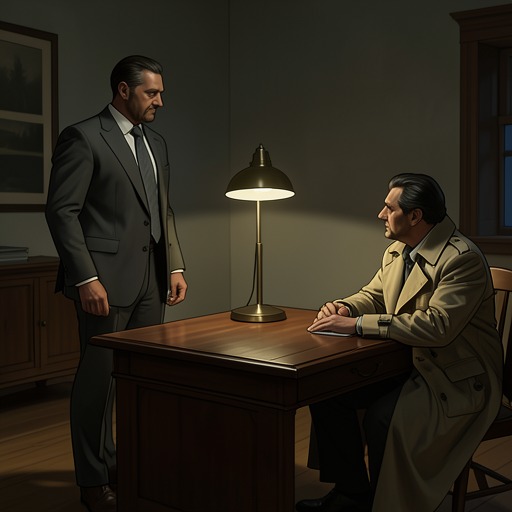
Vico first appears at lunch with Ettore at Granelli’s, where they discuss Ettore’s financial difficulties over prosciutto with melon, vitello tonnato, and Barolo. He promises to speak personally with the bank managers and urges Ettore not to be pessimistic. His confidence soothes Ettore without lifting the insecurity he feels beside him: Vico is urbane, handsome, immaculately dressed, and openly cynical. His suit comes from Huntsman of Savile Row; his shirt, tie, and shoes are equally costly. The narration’s observation that there is nothing synthetic about him, at least on the outside, makes his immaculate surface a pointed introduction to a man whose business depends on concealment.
That ease is also a form of influence. Ettore confides in Vico about Rika’s insistence that their daughter Pinta is in danger, trusting him as both lawyer and friend. Vico does not simply reassure him. He recasts the problem, presenting practical financial devices as a way to satisfy Rika while protecting Ettore’s interests. His counsel sounds considerate because he understands what each person needs to hear; the same fluency later makes him useful to a conspiracy.
The Bodyguard and Insurance Advice
Vico’s suggestion that Ettore hire a bodyguard appears at first to be a face-saving response to Rika’s fears. When Ettore objects that he cannot afford a proper guard, Vico explains that kidnapping is a highly organized business controlled by powerful criminal interests, and puts its previous year’s scale at eighteen billion lire. Good bodyguards are scarce and expensive, he says, partly because terrorism has increased demand. This account gives the threat an air of sober expertise rather than panic.
He then lays out how ransom insurance can make a nominal security hire financially attractive. Italian insurers cannot write kidnapping policies because the government believes coverage might encourage abductions, but insurers abroad can; Lloyd’s of London is described as a world leader. The policy has strict conditions: premiums must be paid outside Italy, and the insured must never disclose the coverage. Vico explains that security measures reduce premiums, just as alarms, watchmen, or guard dogs can lower the cost of insuring a factory. For a hypothetical one-billion-lire policy, he contrasts a premium of fifty million lire with a reduced rate of thirty million if a full-time bodyguard is hired. Since that guard would cost thirty million a year, the calculation initially seems to offer no saving.
Vico supplies the missing category: the premium bodyguard, who may do little to prevent an abduction but qualifies the client for a lower insurance rate and costs about seven million lire annually. The distinction between genuine protection and a hire that merely satisfies the insurer is central to the scheme’s logic. Vico presents the arrangement as an ingenious financial accommodation, not as an invitation to commit a crime. His information about insurance rules and the economics of security ultimately serves as the mechanism by which risk is disguised rather than removed.
Connections and Hidden Allegiances
Vico’s apparent respectability is shadowed by rumors. Elio calls him a clever shark building a reputation through solid government and business contacts, and reports that Vico may have connections with the Italian Mafia. Elio also relays talk of an affair between Vico and Rika, while noting that Vico is apparently helping Ettore arrange bank guarantees to re-equip the factory and may be personally guaranteeing them. Balletto Mills has a cash-flow problem. These reports are not presented as established fact at the time, but they place Vico at a junction where legal advice, political and commercial influence, personal intimacy, and organized crime overlap.
His advice about Pinta’s protection takes on darker meaning when Creasy’s employment is exposed. Vico has helped arrange a bodyguard for a pittance, ostensibly to appease Rika. After Pinta’s kidnapping, Rika discovers that the protection was only a token gesture and condemns Creasy as an inadequate drunk. The family’s original fear had been real: Rika had invoked the Macchetti child, taken outside his school in daylight. Vico’s solution does not answer that fear with meaningful security. It converts the appearance of protection into a useful part of the insurance arrangement.
Exposure and Death
Creasy eventually tells Rika what he learned from Fossella: Pinta’s kidnapping was an insurance job. Ettore had taken out a two-billion-lire policy with Lloyd’s of London, and the agreement was for Fossella to return half the ransom to Ettore. Vico had acted as the go-between, using his organized-crime connections and taking a commission. The figures and roles transform Vico’s earlier financial explanation into evidence of deliberate collusion. The insurance did not merely transfer the family’s risk; the secret policy and planned kickback made the abduction a source of profit for those who arranged it.
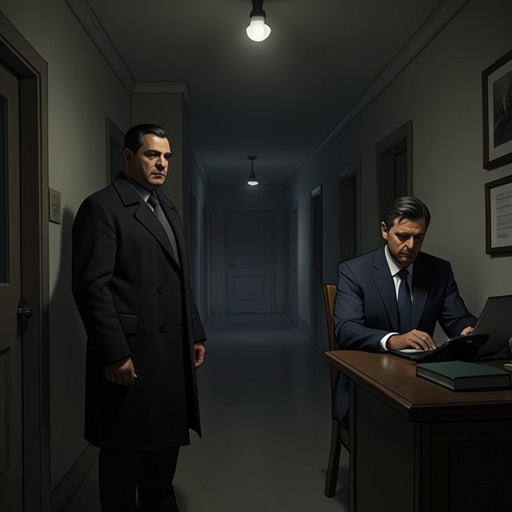
As the truth lands, Rika’s hatred turns toward Ettore. She asks Creasy about Vico, and Creasy tells her not to worry about him. The narrative then shifts to Vico in his penthouse. Ettore phones him, hysterical and nearly incoherent; Vico can barely understand him, but sharply instructs him to wait and get a grip. He tells his wife there is a slight crisis and that he will return late, then goes down to the basement garage. In his Mercedes, he switches on the ignition beside half a kilo of Plastique. The car bomb brings his composed brokerage of other people’s danger to an abrupt end.
Narrative Role
Vico’s character links the book’s domestic anxiety to a larger economy of kidnapping, insurance, banking, and organized crime. His calculations are persuasive because they contain real institutional details: premiums, security discounts, offshore payment, and secrecy requirements. That precision makes his counsel more dangerous, not less. The premium bodyguard embodies the gap between protection as a service and protection as a box to be checked, while Vico’s commission and the ransom kickback reveal how that gap can be exploited by people who control information and access.
His public persona is not exposed by a single lapse in polish; instead, the same skills that make him reassuring also let him coordinate competing interests. He can calm Ettore, supply a face-saving answer to Rika’s concern, and act as the bridge to Fossella. The final contrast is stark: the man who had framed kidnapping as a problem of rates and risk is confronted by the violence those calculations helped organize. Once the scheme is revealed, his financial fluency can no longer shield him.